Community
Federal agent shoots man on North Dakota tribal land, FBI says
By Tommy Anderson
Advertisement · Why this ad?
Jenna Larson has been reporting on the Fargo region for over 15 years. She graduated from North Dakota State University and began her career at The Forum of Fargo-Moorhead before joining the Bison Current network. Jenna's focus is on community events, local initiatives, and the stories that make Fargo unique.
More from Jenna →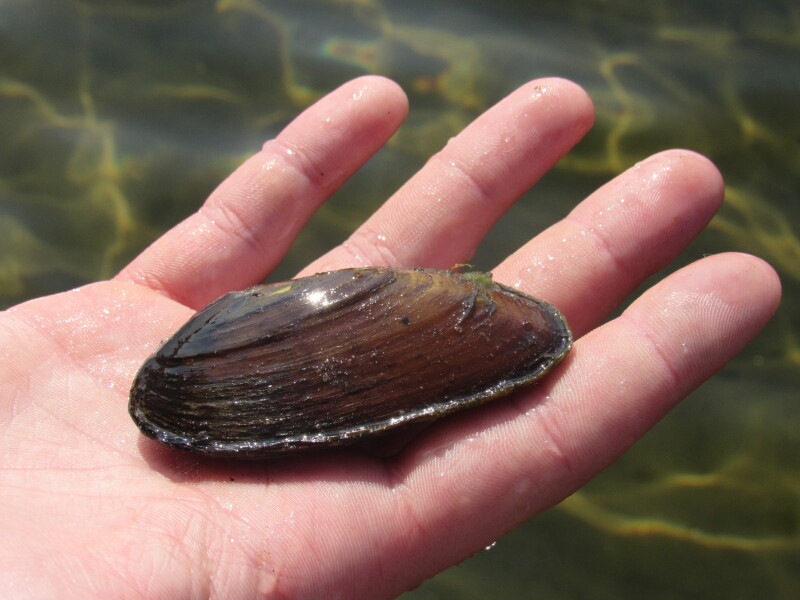
Adobe Stock By Dan Determan Today at 12:10 PM Listen Comments Share Share this article News Reporting News Reporting Based on facts, either observed and verified firsthand by the reporter, or reported and verified from knowledgeable sources. The Trust Project What is this? With more than 50 species calling the lakes and waterways of Minnesota home, the freshwater mussel is considered by the Minnesota Department of Natural Resources (DNR) to be one of the most overlooked animals in the state. However, its livelihood in the state as well as the nation is at risk, as the DNR recognizes the freshwater mussel as one of the most endangered creatures not only in Minnesota, but all of North America. ADVERTISEMENT “Not all of them are at risk, but a large percentage are,” DNR mussel program supervisor Kate Holcomb said. “We have 51 species in Minnesota, and numbers have declined for 33 of them.” Mussels act like freshwater coral reef DNR officials refer to freshwater mussels as “filter feeders.” “While they're sitting there down at the bottom of lakes and rivers, they are spending a ton of time just filtering the water for their food, which is like small particles in the water, like bacteria, algae, fungus, other small organisms,” Holcomb said. This act of filter-feeding plays a crucial role in a water body’s ecosystem, Holcomb said. Mussels eat the smaller organisms that larger fish would gain minimal nutrients from, and in doing so, begin a cycle of nutrients for a vast array of other aquatic creatures. Related Stories Minnesota DNR offering Invasive Aquatic Plant Management grants 5d ago More AIS to fight, less to fight it with in 2027 Nov 2 A busy year for COLA volunteers Oct 11 “Freshwater mussels, as they filter water for their food, produce waste,” Holcomb said. “That waste has nutrients in it, and aquatic insects will eat that and assimilate those nutrients. Small fish eat the aquatic insects, then big fish eat the small fish. Those nutrients become available through the mussel, and just work their way through the food web.” Another key role they play in the local ecosystem is providing shelter and hiding spaces for other fish and small aquatic animals. “They are really important for creating habitat,” Holcomb said. “One of our biologists, who is now retired, would say that the mussel beds – when you have thousands of them aggregated together – act kind of like a freshwater coral reef, in that they provide this structural habitat that supports so much life.” ADVERTISEMENT Not only does this sort of pseudo-reef serve as a great location for creatures to hide, it also can be a preferred location to lay eggs. “They kind of act like rocks, and a lot of fish like rocks for spawning,” she said. “Snails will also lay their eggs on the mussel shells, and the empty shells can be a good hiding place for small fish and crayfish. There is a lot of life associated with the mussel bed.” In northern Minnesota, some of the most common species of freshwater mussels include giant floaters, fatmuckets and cylindrical papershells. “There is a good diversity there, but most of our diversity is in the Mississippi and St. Croix rivers, and in the southeast part of the state, generally speaking,” Holcomb said. “That was a driftless area that was untouched by glaciers. So there has been more time for speciation to happen.” Mussels move with what is known as a single “muscular foot” – an appendage that can emerge from the shell to drag them along, anchor them in one place or help bury them into the substrate. Holcomb said that with this muscular foot, they cannot move very fast and tend not to travel very far. Because of this, mussels require a host fish to complete their life cycle. When a female mussel gives birth, the larvae are sent out into the water to attach to the gills of a “host fish” to develop. The type of host fish varies from species to species, and Holcomb said this does not harm the fish in any way. “It's a really fascinating process, and it's amazing that the mussels can do this without eyes,” she said. ADVERTISEMENT Two species in Hubbard County are threatened Roughly 65% of the freshwater species in North America are considered endangered, threatened or of special concern – including 28 of the 51 species found in Minnesota. Five Minnesota species are presumed extirpated – or locally extinct – and two more are “in imminent danger” of extirpation, according to the DNR. Some of the most imperiled species are protected at the federal level, while others are on state lists, but Holcomb said mussels in general are “pretty highly imperiled” across the country. Two species known to reside in Hubbard County – the black sandshell and creek heelsplitter – are listed as of special concern. One of the chief factors leading to the native mussels’ threatened status is the introduction of non-native species, specifically zebra mussels. The more zebra mussels spread from lake to lake, the greater the threats native species face. “Zebra mussels compete with native mussels for space and resources,” Holcomb said. “Also, zebra mussels attach to hard surfaces, including freshwater mussels, and so they can sometimes encrust the part of the mussel that's exposed out of the substrate to the extent that the mussel isn't able to filter water or reproduce, so it'll eventually just die.” Another issue facing mussels is the degradation of their habitat from pollution, urbanization and what Holcomb called “poor land use practices.” Dams have also been problematic for mussels. “Dams, especially the really large ones, can alter the habitat for the mussels and their host fish to the point that the area just doesn’t support the needs of those mussels,” Holcomb said. “Even if they can withstand the changed habitat, the dam may prevent the host fish from getting to the mussels.” ADVERTISEMENT What you can do to help In an effort to aid this threatened creature, the DNR surveys and monitors the status of mussels on a regular basis. “In some cases, our survey data indicates that some of our mussel species are no longer found in places where they historically were, and as far as we can tell, there's no good way for those mussels to recolonize those areas on their own,” Holcomb said. “In those cases, we’ll propagate the mussel species and then reintroduce them.” Holcomb also reminds Minnesotans that harvesting mussels is not allowed, and may not be safe to consume anyway. MORE OUTDOOR NEWS Doug Leier: The balance of managing deer and deer hunting in North Dakota 6h ago Minnesota ATV enthusiast readies for deer opener 3d ago Mike Frisch: Try late fall crankin’ for bass 3d ago “They’re filter feeders,” Holcomb said. “They could have some toxins, heavy metals and stuff like that in their tissues that you don't want to be eating yourself.” The main thing the average person can do to help native mussels, though, is work to prevent the spread of zebra mussels and other aquatic invasive species, particularly by cleaning and draining the boat before leaving a lake access. People can also work to reduce adverse chemicals in the local watershed. “If everybody makes strides in their own yard to reduce the use of herbicides, pesticides, excess fertilizers … that is going to help our water quality,” Holcomb said, “and those benefits go downstream. Your efforts would make a difference beyond your little area.” Dan Determan can be reached at [email protected]. Comments Share Share this article News Reporting News Reporting Based on facts, either observed and verified firsthand by the reporter, or reported and verified from knowledgeable sources. The Trust Project What is this? Tags Tags HUBBARD COUNTY NORTHLAND OUTDOORS MINNESOTA DEPARTMENT OF NATURAL RESOURCES WILDLIFE By Dan Determan Dan Determan is a multimedia reporter for the Park Rapids Enterprise, covering the events of Nevis, Akeley, Laporte and more. Liste
By Tommy Anderson

By Sofia Cheung
By Emily Thorson

By Jenna Larson